
You do not need to code, raise money, or invent new technology to start an AI business in 2026. The fastest path is simple: use AI tools that already exist to deliver a service people will pay for. This guide is built to be done in one focused session. By the time you reach the end, you will have picked a service, packaged it into an offer, built a real sample with AI, and written the exact message to start your first client conversation, today.
- An AI service chosen, the one thing you sell.
- A productized offer with a name, a clear scope, and a starting price.
- A real AI deliverable built with a copy and paste prompt, no code.
- An outreach message ready to send to three local businesses.
Can you start an AI business in 2026 with no code?
Yes, and it is easier than most people expect. The generative AI boom means you no longer need a technical team or a big budget to offer something valuable. The reason is a shift in where the work happens: instead of building AI, you point tools that already exist at a real problem and charge for the result. That is a service based AI business, and it is the most beginner friendly way in.
Think of it this way. A software startup builds a product and hopes people buy it later. A service business solves a specific problem for a specific client and gets paid now. The second is far simpler to start, needs almost no money, and teaches you what the market actually wants. With AI doing the heavy lifting, one person can now deliver work that used to take a small team.
Which AI business should a beginner start?
For most beginners, the choice comes down to two paths. Both are realistic with no coding, and both use tools that already exist. The difference is what you sell.

| Path | What you actually do |
|---|---|
| AI service or agency | Use AI to deliver content, social media, customer support or admin for clients. Fastest to start and the focus of this guide. |
| AI automation and agents | Set up AI agents and no code automations that run tasks for a business, such as lead follow up or reporting. Slightly more setup, strong demand. |
If you are not sure, start with the service path. It gets you a paying skill the fastest, and everything you learn carries straight over to automations later. If you want to go deeper on each path, we break them down in the AI consultant path and the AI agents path.
For the rest of this guide we will use one running example, because a concrete example beats a list of ideas: an AI content and social media service for a local business. It only needs free tools, it is easy to show off with a sample, and local businesses understand it right away.
Want the full system, live and free?
The AI Business Summit is a free live event where Alicia Lyttle walks beginners through turning AI into a real, no code business, step by step.
Save My Free Seat Free live event · Attend from anywhereFree guide: Copy. Paste. Launch. gives you five copy and paste AI prompts to create an offer, your content, a video and a simple website. No cost, no coding.
Step 1: Pick your AI service in 15 minutes
Your first decision is the one service you will lead with. Do not try to offer everything. One clear service is easier to sell, easier to deliver, and easier to get good at. Here are beginner friendly AI services that a local business will recognize and value:
- AI content and social media. A month of posts, captions and images, planned and produced with AI.
- AI email and newsletters. Written, scheduled and personalized so a business stays in front of its customers.
- AI customer support. A simple assistant that answers common questions and drafts replies day and night.
- AI automation. Connect a business's forms, email and spreadsheets so the busywork runs itself.
- AI local visibility. Reviews, listings and website copy improved with AI so a business shows up better.
To choose, ask yourself three quick questions: Which of these can I picture delivering this week? Which do I already understand a little? Which do local businesses near me obviously need? Pick the one that gets the most yes answers. For our example, we will run with AI content and social media.
Step 2: Turn it into an offer people can buy
A service becomes a business the moment it is an offer someone can say yes to. Vague help is hard to buy. A clear package is easy. Use this simple template:
Offer template: [Name] that gives [who] a [single clear deliverable] every [time frame], starting at [price].
Filled in for our example, it might read: The Local Social Kit that gives a local business a month of ready to post social content, five posts a week with captions and images, delivered every month, starting at a simple monthly rate. Notice what this does. It names the offer, it promises one concrete deliverable, and it sets a rhythm. You are no longer selling vague AI help, you are selling a kit with a clear result.
Keep your first price simple and fair. You are trading a lower starting rate for your first testimonials and case studies, which are worth more than an extra few dollars right now. You can raise prices once you have proof.
Step 3: Build your first AI deliverable today
This is the part that makes it real. You are going to produce an actual sample of your service in minutes, using a free AI tool and plain language. No code, no setup. A sample turns a pitch into a demonstration, and demonstrations are what get replies.
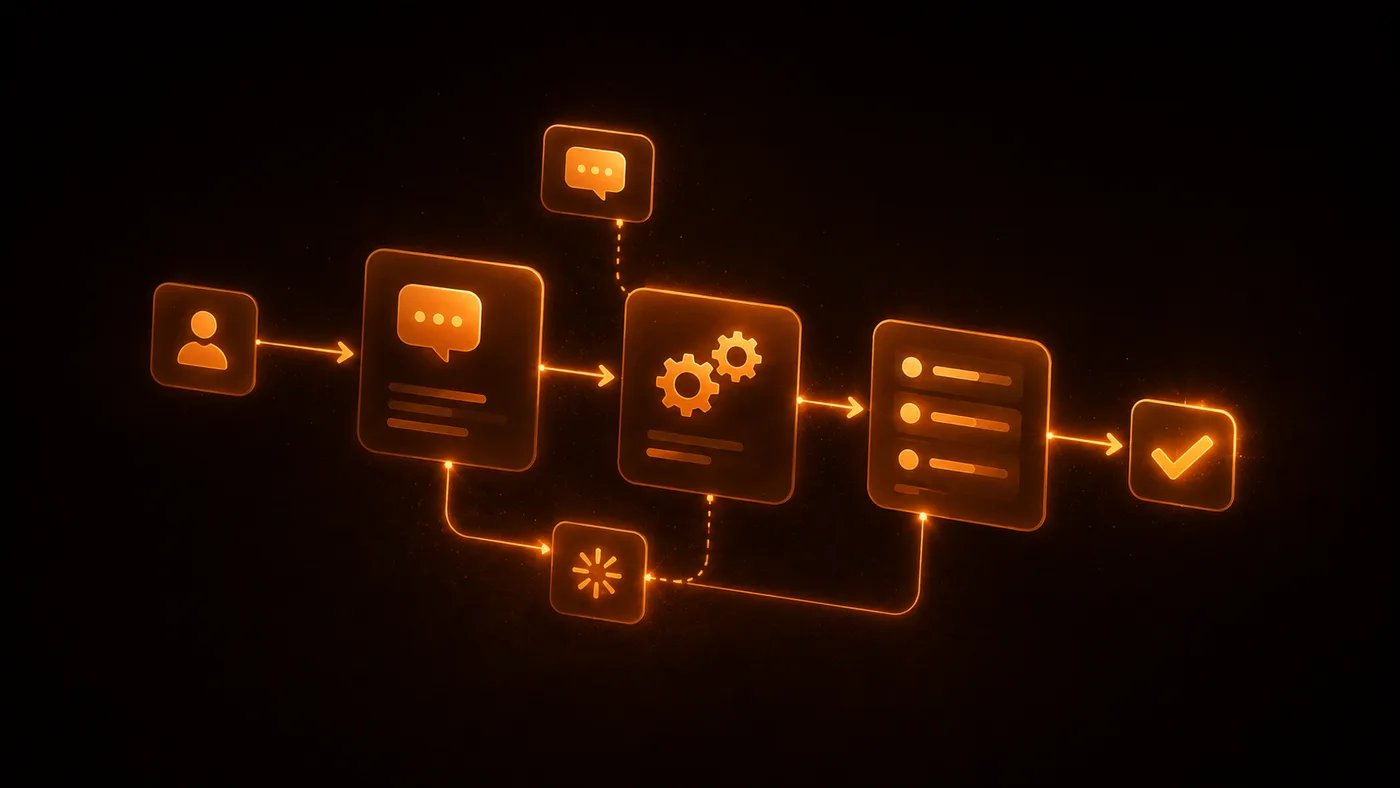
Open any free AI chat tool, pick a real local business you can name, and paste the prompt below. Swap the details in brackets for that business. In one pass you will have a week of social content you can show as a sample.
You are my social media strategist. Create one week of social media
content for a local business.

Business: [name and what they do, e.g. "Bloom & Co, a neighborhood
flower shop"]
City: [city]
Audience: [who their customers are]
Goal: bring more local customers in this month
Brand voice: friendly, warm, local

Give me 5 posts. For each post include:
1. The platform (Instagram or Facebook)
2. A short caption (2 to 4 sentences) with a clear call to action
3. Three relevant local hashtags
4. A one line description of the image to use

Keep it simple, specific to this business, and ready to post.
Read the output, fix anything that sounds off, and drop the image descriptions into a free design tool to create the visuals. That is a real deliverable. You now have proof you can do the work, which is exactly what you need for the next step. If you want to go further, the same approach scales into a full monthly kit, and later into an automation that schedules the posts for you.
Step 4: Start your first client conversation today
You have a service, an offer and a sample. The last step is the one most people skip, and it is the only one that leads to a client: reaching out. Your goal today is not to close a sale. It is to start three conversations.

Find three local businesses you already know or use, the ones whose social media looks quiet or out of date. Then send a short, friendly message that leads with the sample, not a pitch. Something like this:
Outreach message: Hi [name], I love what you do at [business]. I put together a free sample of a week of social posts for you using AI, no strings attached. Want me to send it over? If you like it, I offer it as a simple monthly kit.
That is it. You lead with value, you make it easy to say yes, and you mention the offer without pressure. Some will not reply, and that is normal for any outreach. The point is that you are now in motion, with a real service and real conversations, on day one.
What skills do you really need?
Less technical skill than you think, and more of a few simple habits. The fear that you need to be a programmer is the single biggest thing that keeps beginners on the sidelines, and in 2026 it is mostly unfounded. Here is what actually matters:
- Clear instructions. Knowing how to tell an AI tool what you want, in plain language, is the core skill. It improves every result you get.
- Business judgment. Picking a service people need and an offer they understand matters more than any tool.
- Consistency. Doing a little every day, sending the messages, delivering the work, beats knowing everything.
None of that requires math, a degree, or a coding background. It is closer to running a smart, modern service than to engineering. You learn it by doing one real thing, which you just did in the steps above.
The fastest way to go from here to paid clients
You have the foundation. The next thing that helps most is watching the full system done live, so you can see the tools in action and follow a proven plan instead of piecing it together alone. That is exactly what a free live training is for.
This is where the AI Business Summit fits. It is a free live online event hosted by Alicia Lyttle, an AI strategist and TEDx speaker known for making AI simple for non technical people. Over a few sessions, it walks through building an AI service, setting up an AI content system and assistant, and following a simple plan to find clients. It is a low risk way to turn what you started today into something you keep building. As with anything worth doing, what you get out of it depends on the work you put in.
Turn today's start into a real business
Join the free AI Business Summit and see the full no code system live, then follow the plan step by step.
Register Free AI Business Summit · Live · Replays includedFrequently asked questions
Can you start an AI business with no experience in 2026?
Yes. The most beginner friendly path is a service based AI business, where you use existing AI tools to solve a problem for a client instead of building your own technology. It relies on business judgment and clear instructions, not coding, so people with no technical background can start.
How much money do you need to start an AI business?
A service based AI business can start with very little, because the core tools have free tiers and you sell your time and results rather than a product you build. Your main investment is the hours you put into learning one service and delivering it well.
Do you need to code to run an AI business?
No. Most AI businesses in 2026 run on no code tools and plain language prompts. You connect existing apps and give clear instructions, which is closer to using a smart set of apps than to software engineering.
What is the easiest AI business to start?
For most beginners it is an AI service or agency, such as AI content and social media, AI customer support, or AI automation for small businesses. These use tools that already exist, so you can produce a real deliverable and offer it to clients quickly.
How fast can you get your first AI client?
There is no guarantee, and results depend on your effort and market. Because you can create a sample deliverable in minutes with AI, many beginners are able to start real client conversations the same day they build their offer.
Is starting an AI business still worth it in 2026?
Demand for people who can apply AI to marketing, operations and content keeps growing, while the tools keep getting easier to use. That is why so many beginners are learning one AI service and offering it, though as with any business the outcome depends on the work you put in.

About: AI Business Summit covers practical AI training and events for beginners and business owners, including the AI Business Summit 2026 hosted by AI strategist and TEDx speaker Alicia Lyttle. Our focus is real world use of AI, minus the hype.
Free guide: Copy. Paste. Launch. gives you five copy and paste AI prompts to create an offer, your content, a video and a simple website. No cost, no coding.